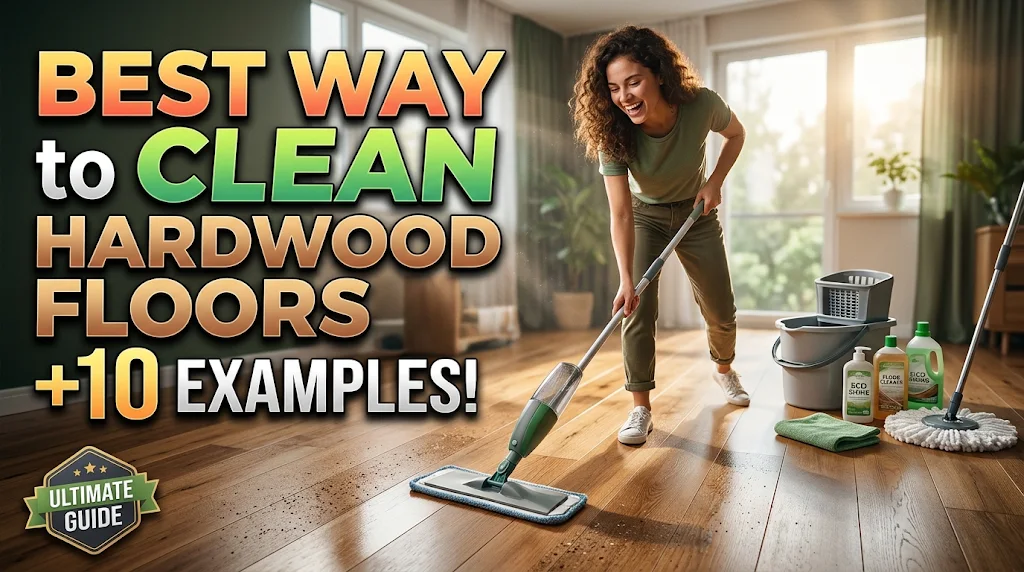
The best way to clean hardwood floors is to remove loose dirt with a microfiber mop or soft vacuum then use a lightly damp microfiber mop and a manufacturer-approved wood floor cleaner. Dry spills immediately and avoid excess water steam and harsh chemicals.
Hardwood floors make a home feel warm elegant and welcoming. However dust muddy footprints pet hair and everyday spills can quickly make them look dull.
The best way to clean hardwood floors depends on their finish condition and the type of dirt you need to remove. Using the wrong cleaning solution can damage protective coatings or allow moisture to reach the wood.
This guide explains 10 practical cleaning methods suitable products common mistakes and professional maintenance advice. Whether you have solid hardwood or engineered flooring you will learn how to clean it without unnecessary damage.
What Is the Best Way to Clean Hardwood Floors?
The safest general approach is to remove loose dirt first then lightly clean the surface using a microfiber mop and a cleaner approved for your flooring. Never leave standing water on hardwood.
Five effective cleaning approaches:
- Dry microfiber dust mopping
- Soft-bristle sweeping
- Bare-floor vacuuming
- Damp microfiber mopping
- Hardwood-specific spray cleaning
What Does Cleaning Hardwood Floors Mean?
Cleaning hardwood floors means removing dust dirt stains and everyday residue without damaging the wood or its protective finish.
It involves two main activities:
- Dry cleaning: Removing loose dirt dust crumbs and pet hair.
- Light wet cleaning: Removing stuck-on dirt using an appropriate wood floor cleaner.
The goal is to maintain a clean appearance while protecting the floor’s surface.
Example: Instead of pouring soapy water across a wooden floor remove the dust first and carefully clean the surface with a suitable microfiber mop.
What You Need Before Cleaning
Gather these basic supplies:
- Microfiber dust mop
- Soft-bristle broom
- Vacuum with a hard-floor setting
- Clean microfiber mop pads
- Manufacturer-approved hardwood floor cleaner
- Soft microfiber cloth
- Dry towel for spills
Pro tip: Check your flooring manufacturer’s care instructions before using a new product. Finished unfinished waxed and oiled floors may require different cleaning methods.
Other Ways to Clean Hardwood Floors: 10 Effective Methods
These methods are arranged from everyday maintenance to more specialized cleaning situations.
Dry Microfiber Dust Mopping
Meaning: Removing loose dirt with a dry microfiber pad.
Explanation: Microfiber attracts and collects dust fine particles and pet hair. It is an excellent first step before deeper cleaning.
Example: Run a dry microfiber mop across the living room before guests arrive.
- Best Use: Everyday dust removal
- Avoid Using In: Wet stain removal
- Tone: Gentle and practical
- Formality Level: ⭐⭐⭐⭐⭐
- Usage Frequency: Very Common
- Common Collocations: Dry dust mop microfiber pad loose debris surface dust
- Context Examples:
- Spoken English: I’ll dust-mop the living room.
- Professional English: Dry dust mopping is part of our routine floor maintenance.
- Casual Conversation: Let’s quickly remove the dust.
Sweeping With a Soft-Bristle Broom
Meaning: Removing dirt and debris with a gentle broom.
Explanation: A soft-bristle broom collects larger particles without the harsh contact of stiff cleaning brushes.
Use gentle strokes and avoid pushing sharp grit across the surface.
Example: Sweep the kitchen floor after preparing dinner.
- Best Use: Crumbs and debris
- Avoid Using In: Heavy sticky stains
- Tone: Simple and natural
- Formality Level: ⭐⭐⭐⭐⭐
- Usage Frequency: Very Common
- Common Collocations: Soft-bristle broom sweep the floor collect crumbs remove debris
- Context Examples:
- Spoken English: Can you sweep the hallway?
- Professional English: Sweep the area before applying the approved cleaner.
- Casual Conversation: I’ll grab the broom.
Vacuuming With a Hard-Floor Setting
Meaning: Removing dirt using a vacuum designed for hard surfaces.
Explanation: A vacuum can collect dust and debris from corners and spaces between boards. Use a hard-floor setting or a suitable soft attachment.
Avoid rotating beater bars that may scratch the finish.
Example: Vacuum underneath the dining table to remove crumbs and pet hair.
- Best Use: Corners and pet hair
- Avoid Using In: Delicate damaged surfaces without checking suitability
- Tone: Practical and efficient
- Formality Level: ⭐⭐⭐⭐⭐
- Usage Frequency: Very Common
- Common Collocations: Vacuum attachment bare-floor setting pet hair floor debris
- Context Examples:
- Spoken English: I’ll vacuum the bedroom.
- Professional English: Use the hard-floor attachment during routine maintenance.
- Casual Conversation: The dog has left hair everywhere.
Damp Microfiber Mopping
Meaning: Cleaning with a microfiber mop that contains very little moisture.
Explanation: This method removes dirt that dry cleaning cannot collect. The mop should be well wrung out never dripping.
Use only the moisture and cleaning method permitted by your floor manufacturer.
Example: Lightly damp-mop the hallway after removing accumulated dust.
- Best Use: Everyday stuck-on dirt
- Avoid Using In: Standing water conditions
- Tone: Careful and effective
- Formality Level: ⭐⭐⭐⭐⭐
- Usage Frequency: Common
- Common Collocations: Damp microfiber mop clean mop pad light moisture wood floor maintenance
- Context Examples:
- Spoken English: The hallway needs a quick damp mop.
- Professional English: Use a well-wrung microfiber mop for approved surface cleaning.
- Casual Conversation: I’ll clean those marks.
Using a Hardwood Floor Spray Cleaner
Meaning: Applying a cleaner specifically formulated for hardwood flooring.
Explanation: A suitable hardwood cleaner helps remove everyday grime without relying on excessive water. Follow the product label and flooring manufacturer’s recommendations.
Do not assume that every multipurpose cleaner is safe for wood.
Example: Spray an approved hardwood cleaner onto the recommended area and wipe it with a microfiber pad.
- Best Use: Routine surface cleaning
- Avoid Using In: Incompatible floor finishes
- Tone: Professional and reliable
- Formality Level: ⭐⭐⭐⭐⭐
- Usage Frequency: Common
- Common Collocations: Hardwood floor cleaner spray cleaner cleaning solution surface residue
- Context Examples:
- Spoken English: Which wood floor cleaner do you use?
- Professional English: Apply the approved cleaning solution according to its instructions.
- Casual Conversation: This cleaner works for our wooden floors.
Native Speaker Tip: Choosing the First Five Methods
In everyday English people naturally say sweep the floor vacuum the floor and mop the floor.
In professional cleaning instructions phrases such as dry dust mopping and manufacturer-approved cleaning solution sound more precise.
The most useful everyday expression is clean the floor with a microfiber mop. It explains the action without sounding unnecessarily technical.
Spot Cleaning With a Soft Cloth
Meaning: Cleaning a small dirty area instead of the entire floor.
Explanation: Spot cleaning is useful for isolated marks fingerprints and minor spills. Use a soft cloth and a cleaner approved for your flooring.
Avoid aggressive scrubbing especially when the finish is already worn.
Example: Wipe a small food stain near the kitchen counter.
- Best Use: Small localized marks
- Avoid Using In: Large-area cleaning
- Tone: Precise and gentle
- Formality Level: ⭐⭐⭐⭐⭐
- Usage Frequency: Very Common
- Common Collocations: Spot cleaning soft cloth small stain localized dirt
- Context Examples:
- Spoken English: I’ll clean that spot.
- Professional English: Spot-clean affected areas using an approved product.
- Casual Conversation: There’s a little mark here.
Cleaning Spills Immediately
Meaning: Removing liquid spills before they can damage the floor.
Explanation: Water juice coffee and other liquids should not remain on hardwood. Blot the spill with a soft absorbent cloth and follow the floor manufacturer’s instructions.
Quick action helps prevent moisture from entering joints and damaging the wood.
Example: Immediately wipe up spilled water beside the kitchen sink.
- Best Use: Fresh liquid spills
- Avoid Using In: Deep structural damage
- Tone: Preventive and practical
- Formality Level: ⭐⭐⭐⭐⭐
- Usage Frequency: Very Common
- Common Collocations: Wipe up spills absorb moisture dry the surface prevent water damage
- Context Examples:
- Spoken English: Wipe up that water quickly.
- Professional English: Remove liquid spills immediately to minimize moisture exposure.
- Casual Conversation: Don’t leave that juice there.
Cleaning Along the Wood Grain
Meaning: Wiping in the direction of the visible wood pattern.
Explanation: Following the board direction can make cleaning more controlled and help you reach dirt along natural surface lines.
This is a useful technique although the correct cleaning product and moisture level matter more.
Example: Move your microfiber mop along the length of the wooden boards.
- Best Use: Controlled surface cleaning
- Avoid Using In: Areas requiring specialist treatment
- Tone: Careful and methodical
- Formality Level: ⭐⭐⭐⭐
- Usage Frequency: Common
- Common Collocations: Wood grain board direction microfiber movement surface cleaning
- Context Examples:
- Spoken English: Mop along the boards.
- Professional English: Clean in the direction of the flooring boards.
- Casual Conversation: Follow the wood pattern.
Deep Cleaning With an Approved Hardwood Product
Meaning: Removing heavier accumulated dirt using a suitable deep-cleaning product.
Explanation: Some floors need more than regular dust removal. A deep cleaner approved for the specific finish may help loosen stubborn buildup.
Always follow the manufacturer’s instructions. Do not use a powerful product simply because a floor looks dirty.
Example: Use an approved deep cleaner when routine maintenance no longer removes accumulated grime.
- Best Use: Stubborn surface buildup
- Avoid Using In: Unfinished incompatible flooring
- Tone: Specialized and professional
- Formality Level: ⭐⭐⭐⭐⭐
- Usage Frequency: Occasional
- Common Collocations: Deep cleaning stubborn buildup approved cleaner heavy soil
- Context Examples:
- Spoken English: The floor needs a deeper clean.
- Professional English: Use a finish-compatible deep-cleaning product.
- Casual Conversation: Let’s give the floor extra attention.
Using Professional Hardwood Floor Cleaning Services
Meaning: Hiring trained specialists to clean or maintain hardwood flooring.
Explanation: Professional help may be appropriate for extensive buildup difficult stains damaged finishes or floors requiring specialized maintenance.
Cleaning and refinishing are different services. A professional should assess whether the floor needs cleaning restoration or refinishing.
Example: Contact a flooring specialist when ordinary cleaning cannot improve the floor’s condition.
- Best Use: Difficult floor problems
- Avoid Using In: Simple daily dust removal
- Tone: Expert and formal
- Formality Level: ⭐⭐⭐⭐⭐
- Usage Frequency: Occasional
- Common Collocations: Professional floor cleaning floor restoration surface assessment refinishing service
- Context Examples:
- Spoken English: We should call a flooring specialist.
- Professional English: Arrange a professional assessment of the flooring.
- Casual Conversation: Let’s get an expert to look at it.
Native Speaker Tip: Choosing Methods Six to Ten
Native English speakers usually use short action phrases when discussing household cleaning.
For example wipe up a spill sounds more natural than perform liquid spill removal. However professional maintenance instructions often require precise technical language.
Use spot clean for a small mark deep clean for accumulated dirt and hire a professional when specialist attention is needed.
When Should You Use These Cleaning Methods?
Different situations require different approaches.
| Situation | Recommended Method | Reason |
| Daily household dust | Microfiber dust mop | Removes loose particles |
| Pet hair | Hard-floor vacuum | Collects hair efficiently |
| Kitchen crumbs | Soft-bristle broom | Removes larger debris |
| Stuck-on dirt | Approved damp mopping | Cleans surface grime |
| Fresh liquid spill | Immediate spot cleaning | Limits moisture exposure |
| Small food stain | Soft cloth cleaning | Targets the affected area |
| Heavy buildup | Approved deep cleaner | Addresses stubborn dirt |
| Damaged finish | Professional assessment | Prevents further damage |
Formal Professional and Natural Cleaning Expressions
Although these expressions describe similar activities their tone and context differ.
Natural English: I’m going to mop the wooden floor.
This sounds normal in daily conversation.
Polite English: Could you please help me clean the hardwood floor?
This is appropriate when requesting assistance.
Professional English: Please clean the hardwood flooring using an approved microfiber cleaning system.
This sounds suitable for workplace instructions.
Formal English: The hardwood flooring should be maintained according to the manufacturer’s care guidelines.
This works well in reports policies and formal documents.
Expert Insight: Communicating Clearly About Floor Care
In workplace communication choose direct verbs such as clean wipe sweep and vacuum.
In business emails explain the task and required cleaning products clearly. Avoid vague expressions such as make the floor look nice.
In academic writing distinguish between cleaning maintenance restoration and refinishing. These terms describe different processes.
For professional instructions specificity matters more than complicated vocabulary.
Common Mistakes When Cleaning Hardwood Floors
Mistake : Using Too Much Water
Wrong approach: Flooding the floor with water.
Why incorrect: Excess moisture can enter joints and damage wooden boards.
Correct approach: Follow the manufacturer’s cleaning instructions and use minimal moisture where permitted.
Example: Use an approved lightly damp cleaning method instead of a soaking wet mop.
Mistake : Using Vinegar as a Universal Cleaner
Wrong approach: Assuming vinegar is safe for every hardwood floor.
Why incorrect: Acidic cleaners can damage certain protective finishes over time.
Correct approach: Choose a cleaner approved for the specific floor.
Example: Use a compatible hardwood floor cleaner rather than a homemade vinegar solution.
Mistake : Using a Steam Mop Without Approval
Wrong approach: Applying steam to hardwood flooring.
Why incorrect: Heat and moisture can damage finishes and wood.
Correct approach: Check the flooring manufacturer’s instructions and avoid steam unless explicitly approved.
Example: Use the recommended microfiber cleaning method instead.
Mistake : Vacuuming With a Rotating Beater Bar
Wrong approach: Using an unsuitable carpet vacuum setting.
Why incorrect: A rotating brush may scratch or damage the surface.
Correct approach: Use a hard-floor setting or suitable attachment.
Example: Switch off the beater bar before vacuuming wooden boards.
Mistake : Applying Furniture Polish to Make Floors Shine
Wrong approach: Using ordinary furniture polish on hardwood floors.
Why incorrect: Unsuitable products may create slippery residue or interfere with future maintenance.
Correct approach: Use only products recommended for the floor’s finish.
Example: Choose an approved maintenance product rather than furniture spray.
What Should You Avoid When Cleaning Hardwood Floors?
Some cleaning products and tools can create more problems than they solve.
| Avoid | Possible Problem | Better Approach |
| Excess water | Swelling and moisture damage | Minimal approved moisture |
| Steam cleaners | Heat and moisture damage | Manufacturer-approved cleaning |
| Vinegar | Finish deterioration | Compatible wood cleaner |
| Bleach | Discoloration or finish damage | Approved stain treatment |
| Ammonia | Finish damage | Hardwood-specific product |
| Abrasive scrubbers | Surface scratches | Soft microfiber cloth |
| Wax and polish | Residue or incompatible buildup | Finish-approved maintenance |
Important: Waxed oiled unfinished and polyurethane-finished floors do not all have identical care requirements. Always identify your flooring type first.
How Often Should You Clean Hardwood Floors?
A simple maintenance schedule can keep floors looking better without unnecessary cleaning.
| Frequency | Cleaning Task |
| Daily or as needed | Remove dust and loose dirt |
| Immediately | Clean spills |
| Weekly or as needed | Vacuum and inspect high-traffic areas |
| Periodically | Use an approved surface cleaner |
| As recommended | Perform specialized maintenance |
Cleaning frequency depends on household traffic pets children and environmental conditions.
For example an entryway may need daily attention while a guest bedroom may require much less frequent cleaning.
Advantages and Disadvantages of Proper Hardwood Cleaning
Pros
- Preserves appearance: Regular care helps maintain the floor’s natural beauty.
- Reduces scratches: Removing grit prevents abrasive particles from being dragged across the finish.
- Improves cleanliness: Routine cleaning removes dust crumbs and everyday dirt.
- Supports long-term maintenance: Suitable products help protect the existing finish.
- Saves unnecessary effort: Small spills and marks are easier to address promptly.
Cons
- Requires consistency: Regular maintenance takes time.
- Product selection matters: Incorrect cleaners can damage certain finishes.
- Some stains need specialists: Deep discoloration may not respond to ordinary cleaning.
- Moisture requires care: Excess water can cause serious problems.
- Different floors need different treatment: One cleaning method cannot suit every finish.
Best Cleaning Method for Different Needs
| Method | Tone | Formality | Best Use | Frequency |
| Dry microfiber mopping | Practical | Neutral | Dust removal | Very common |
| Soft-bristle sweeping | Simple | Neutral | Crumbs | Very common |
| Hard-floor vacuuming | Efficient | Neutral | Pet hair | Very common |
| Damp microfiber mopping | Careful | Neutral | Surface dirt | Common |
| Hardwood spray cleaner | Professional | Professional | Routine cleaning | Common |
| Soft-cloth spot cleaning | Gentle | Neutral | Small stains | Very common |
| Immediate spill cleaning | Preventive | Neutral | Liquid spills | Very common |
| Cleaning along the grain | Methodical | Professional | Board cleaning | Common |
| Approved deep cleaning | Specialized | Professional | Heavy buildup | Occasional |
| Professional cleaning service | Expert | Formal | Difficult problems | Occasional |
Best Choice: Which Cleaning Method Should You Choose?
Overall: Dry microfiber dusting followed by an appropriate hardwood floor cleaner. This combination addresses everyday dirt without unnecessary moisture.
Professional Choice: An approved microfiber cleaning system. It provides a controlled approach for regular maintenance.
Pet Owners: A suitable hard-floor vacuum attachment combined with microfiber dusting.
Kitchen Floors: Immediate spill removal followed by appropriate surface cleaning.
Stubborn Dirt: A compatible deep-cleaning product used according to its instructions.
Small Stains: A soft microfiber cloth and suitable spot cleaner.
Damaged Floors: A professional flooring assessment rather than aggressive scrubbing.
Commonly Confused Hardwood Cleaning Terms
Understanding these terms helps you choose the right cleaning method.
Cleaning vs. polishing
Cleaning removes dirt and residue. Polishing changes the surface appearance or adds a product layer. Polishing is not a replacement for cleaning.
Cleaning vs. disinfecting
Cleaning removes dirt and many unwanted substances. Disinfecting uses an appropriate product to reduce microorganisms. Not every floor cleaner is a disinfectant.
Cleaning vs. refinishing
Cleaning removes surface dirt. Refinishing involves restoring or replacing a floor’s protective finish and may require professional work.
Solid hardwood vs. engineered hardwood
Solid hardwood is made from solid wood boards. Engineered hardwood has a real wood surface layer over a layered construction. Both require moisture-conscious care but their maintenance instructions may differ.
Scenario Practice: Test Your Understanding
Choose the most suitable cleaning method for each situation.
Situation : Business meeting
A cleaning supervisor must remove dust before an office inspection.
Which method would you choose?
Answer: Dry microfiber dust mopping.
Explanation: It efficiently collects loose dust without unnecessary moisture.
Situation : Interview
An interviewer asks how you maintain a wooden office floor.
Which method would you mention?
Answer: Manufacturer-approved hardwood cleaning.
Explanation: This demonstrates awareness of professional cleaning standards.
Situation : Presentation
You are explaining how to remove pet hair from hardwood flooring.
Which method would you recommend?
Answer: Vacuuming with a hard-floor attachment.
Explanation: It collects loose hair from corners and difficult areas.
Situation : Classroom discussion
A student spills water on a wooden classroom floor.
Which action is best?
Answer: Immediately blot and dry the spill.
Explanation: Quick removal limits moisture exposure.
Situation : Email reply
A manager asks for instructions to clean an office’s hardwood floors.
Which phrase sounds most professional?
Answer: Please use a manufacturer-approved hardwood floor cleaner and microfiber cleaning pad.
Explanation: The instruction is clear polite and specific.
Mini Quiz: Check Your Hardwood Cleaning Knowledge
What is the best first step before damp cleaning?
A. Apply furniture polish
B. Remove loose dirt
C. Pour warm water
D. Use a steam mop
Which tool is suitable for everyday dust removal?
A. Steel wool
B. Abrasive brush
C. Microfiber dust mop
D. Rough sponge
Why should spills be removed immediately?
A. increase shine
B. prevent moisture damage
C change the wood color
D remove the floor finish
Which expression is most suitable for a professional cleaning instruction?
A. Make it look cool
B. Do some floor stuff
C. Clean it however you like
D. Use the manufacturer-approved cleaning product
What should you do before using a new floor cleaner?
A. Mix it with vinegar
B. Apply it everywhere
C. Check compatibility with the flooring
D. Use extra water
Answer Key
- B Remove loose dirt.
- C Microfiber dust mop.
- B Prevent moisture damage.
- D Use the manufacturer-approved cleaning product.
- C Check compatibility with the flooring.
Frequently Asked Questions
What is the best way to clean hardwood floors without damaging them?
Remove dust with a microfiber mop or suitable vacuum. Then follow your flooring manufacturer’s instructions for surface cleaning. Use an approved product and avoid excessive water steam and harsh chemicals.
Can I clean hardwood floors with vinegar and water?
Vinegar is not recommended as a universal hardwood cleaner. Its acidity can damage some protective finishes over time. Choose a cleaning solution approved by your flooring manufacturer instead.
How often should hardwood floors be mopped?
There is no universal schedule for every home. Remove dust regularly and clean spills immediately. Use an approved mop-cleaning method when needed depending on household traffic and your flooring manufacturer’s recommendations.
Is a steam mop safe for hardwood floors?
Steam mops are generally unsuitable for hardwood because heat and moisture can damage the wood and its protective finish. Use one only if your specific flooring manufacturer explicitly approves it.
What is the best cleaner for engineered hardwood floors?
Choose a product specifically approved for your engineered hardwood’s surface finish. Many polyurethane-finished engineered floors accept compatible hardwood cleaners but always check the manufacturer’s maintenance instructions first.
Conclusion
The best way to clean hardwood floors is to combine regular dust removal careful surface cleaning and immediate spill treatment. Microfiber mops suitable vacuum attachments and manufacturer-approved cleaning products can help maintain attractive floors without unnecessary damage. Remember that different finishes require different care so avoid assuming one homemade solution works everywhere.
Make hardwood maintenance part of your regular household routine. Start with gentle cleaning methods check product compatibility and address small problems early. With the right knowledge and consistent care you can protect your flooring and keep your home looking welcoming for years.

Ryan Foster is a creative writer at RepliesNext.com sharing witty replies pickup lines funny comebacks and conversation ideas to help readers always find the perfect words.