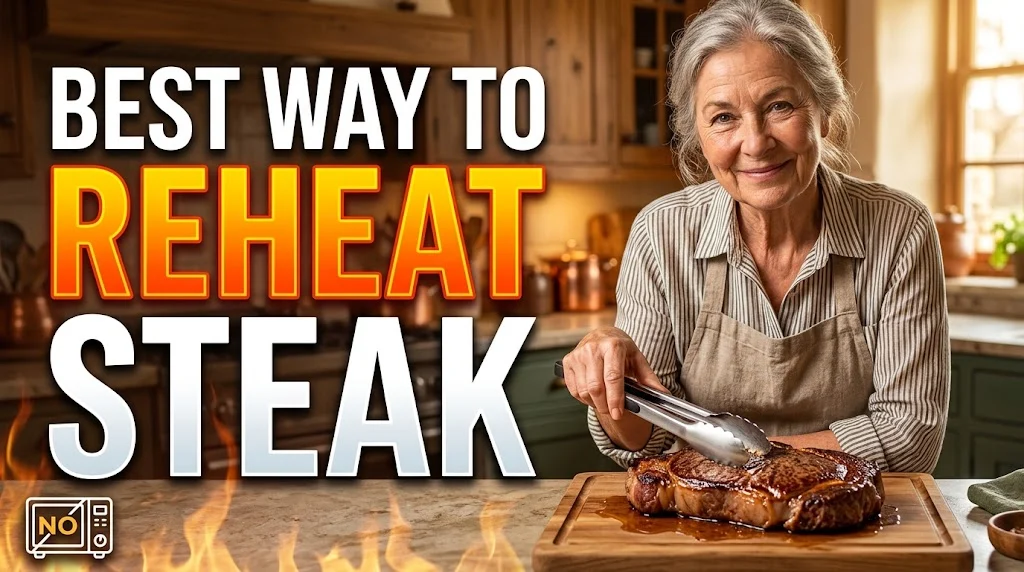
The best way to reheat steak is a low oven followed by a quick skillet sear, sous vide, a covered skillet, an air fryer, or a butter-basted pan. These methods warm the center gently while protecting the crust and juiciness .
Best way to reheat steak is a practical search phrase. It asks for the most reliable method to warm leftover steak without turning it dry or rubbery. The wording matters because the answer changes with thickness, equipment, and time.
English learners and professionals often need alternative ways to express this idea. You might describe the technique in a cooking class, a work lunch conversation, or a recipe blog. Knowing both the method and the phrasing builds vocabulary and confidence.
This guide teaches ten alternative methods and expressions. Each comes with tone, formality, and real examples. You will also find mistakes to avoid, scenario practice, and a mini quiz.
Quick Category Section: Phrasing Alternatives
Formal Alternatives
- The optimal technique for warming cooked steak
- The most reliable approach to reheating leftover beef
- The preferred method for restoring steak to serving temperature
Pro Tip: Use these in academic writing or formal presentations. They sound measured and precise.
Professional Alternatives
- The standard reheating protocol for steak
- The recommended method for warming leftover steak
- The best-practice approach to steak reheating
Pro Tip: These fit workplace communication, training documents, and chef interviews.
Business Email Alternatives
- For best results, warm the steak gently and finish with a quick sear.
- The recommended approach is a low oven followed by a skillet sear.
- We suggest reheating steak slowly to preserve texture.
Pro Tip: Keep email phrasing direct. Lead with the action, then explain the reason.
Academic Alternatives
- The low-temperature oven method followed by searing
- The sous vide rethermalization technique
- The controlled reheating approach for cooked beef
Pro Tip: Academic English favors noun phrases. Name the method, then describe its effect.
Casual Alternatives
- The oven-and-pan trick
- The gentle warm-up method
- The quick skillet fix
Pro Tip: Casual phrases work in spoken English and friendly blog posts. They feel relaxed, not careless.
Informal Expressions
- Warm it low and sear it fast.
- Give it a gentle heat and a quick crust.
- Don’t nuke it warm it slow and sear it.
Pro Tip: Informal English is fine in conversation. Avoid it in professional writing unless the tone is intentionally friendly.
Common Mistakes When Reheating Steak (and Saying It)
Saying cook it again instead of reheat it
Why incorrect: Cook implies raw meat. Reheating is warming already-cooked food.
Correct phrase: Reheat the steak gently.
Example: ❌ I will cook the steak in the microwave. → ✅ I will reheat the steak gently in a low oven.
Using best way without context
Why incorrect: The best method depends on thickness and equipment. A blanket claim sounds unreliable.
Correct phrase: The best way for thick cuts is a low oven, then a sear.
Example: ❌ The best way is always the microwave. → ✅ The best way for a thick ribeye is a low oven followed by a skillet sear.
Confusing warm with hot
Why incorrect: Steak should be warm in the center, not piping hot. High heat overcooks it.
Correct phrase: Warm it until the center reaches 110°F–125°F, then sear.
Example: ❌ Heat it until it is steaming hot. → ✅ Warm it gently until the center is warm, then sear for crust.
Saying juicy when you mean moist
Why incorrect: Juicy describes meat with natural juices. Moist is broader and less precise for steak.
Correct phrase: The low oven method keeps the steak juicy.
Example: ❌ The microwave makes it moist. → ✅ The microwave can dry out the steak and make it rubbery.
Using fry for reheating
Why incorrect: Fry suggests cooking raw food in oil. Reheating uses a quick sear for crust, not full cooking.
Correct phrase: Sear it briefly to restore the crust.
Example: ❌ Fry the leftover steak for five minutes. → ✅ Sear the warmed steak for 60–90 seconds per side.
What Does Best Way to Reheat Steak Mean?
Definition: The phrase asks for the most effective method to warm cooked steak so it stays tender, juicy, and safe to eat.
Grammar note: Reheat is a transitive verb. You reheat the steak. Best way is a noun phrase followed by an infinitive (to reheat). The structure is common in how-to questions.
Simple explanation: You already cooked the steak. Now you want to warm it without ruining it. The best way is the method that protects moisture and texture.
Example sentence: The best way to reheat steak is to warm it slowly and then sear it quickly.
When to Use This Phrase and Its Alternatives
Business communication: Use it in team lunch planning, food service training, or client dining discussions.
Example: For the client lunch, what is the best way to reheat the steak without losing quality?
Emails: Use it when sharing instructions with colleagues or catering staff.
Example: Please confirm the best way to reheat steak for tomorrow’s event.
Meetings: Use it in culinary team briefings or product testing sessions.
Example: Let’s standardize the best way to reheat steak across all locations.
Presentations: Use it in food science or hospitality training slides.
Example: This slide compares the best way to reheat steak by equipment type.
Academic writing: Use formal alternatives in food science papers or culinary textbooks.
Example: The low-temperature oven method is widely regarded as an effective approach to reheating cooked beef.
Interviews: Use it in culinary job interviews to show practical knowledge.
Example: I would use a low oven and a quick sear that is the best way to reheat steak without overcooking it.
Daily conversations: Use casual alternatives with friends and family.
Example: Just warm it low and sear it fast that’s the trick.
Professional vs Polite vs Formal vs Natural
| Register | Example Phrase | When to Use |
| Polite | Would you like me to warm the steak gently for you? | Offering help to guests or colleagues |
| Professional | The recommended reheating method is a low oven followed by a sear. | Workplace instructions, training |
| Formal | The optimal technique for reheating cooked beef involves controlled low-temperature warming. | Academic or official writing |
| Natural | The best way is to warm it slow, then sear it quick. | Everyday spoken English |
Pros and Cons of Focusing on The Best Way
Pros
- Gives a clear, actionable answer.
- Helps beginners avoid common errors.
- Supports food safety and quality.
- Creates a useful search and learning topic.
Cons
- Can oversimplify methods depend on thickness and equipment.
- May ignore personal preference and available tools.
- Best is subjective without context.
- Encourages one-size-fits-all thinking.
Other Ways to Say Best Way to Reheat Steak (10 Alternatives)
The following ten alternatives include both methods and phrasing alternatives. They are arranged from most useful to least common in everyday English.
The Low-Oven-and-Sear Method
Meaning: Warm the steak in a 250°F oven until the center reaches about 110°F, then sear it in a hot skillet for 60–90 seconds per side .
Explanation: This is the most reliable method for thick cuts. It is professional and neutral in tone. It protects the interior while restoring the crust.
Example Sentence: For a thick ribeye, the low-oven-and-sear method gives the most even result.
Best Use: Thick cuts, planned meals
Avoid Using In: Extreme time pressure
Tone: Precise and practical
Formality Level: ⭐⭐⭐⭐
Usage Frequency: Very Common
CEFR Level: B2
Common Collocations: low oven, wire rack, instant-read thermometer, quick sear
Context Examples: Professional English, cooking tutorials
Sous Vide Reheating
Meaning: Seal the steak in a bag and warm it in a water bath set to 120°F–130°F for 20–60 minutes, then sear briefly .
Explanation: This is the most precise method. It is formal and professional. It suits thick steaks and users who own a sous vide machine.
Example Sentence: Sous vide reheating preserved the medium-rare center perfectly.
Best Use: Precision, thick steaks
Avoid Using In: No equipment available
Tone: Technical and controlled
Formality Level: ⭐⭐⭐⭐⭐
Usage Frequency: Common (among enthusiasts)
CEFR Level: C1
Common Collocations: water bath, vacuum seal, precise temperature, edge-to-edge
Context Examples: Professional English, food science discussions
The Skillet-Only Method
Meaning: Warm a covered skillet over medium heat, add butter or oil, and flip the steak every minute until warm .
Explanation: This is a fast, casual method. It is neutral in tone and works for thinner steaks. It requires attention to avoid overcooking.
Example Sentence: The skillet-only method is quick, but you have to watch it closely.
Best Use: Thin steaks, speed
Avoid Using In: Very thick cuts
Tone: Practical and direct
Formality Level: ⭐⭐⭐
Usage Frequency: Very Common
CEFR Level: B1
Common Collocations: covered skillet, medium heat, flip every minute
Context Examples: Spoken English, casual conversation
The Air-Fryer Reheat
Meaning: Preheat the air fryer to 350°F and heat the steak for 2–5 minutes, checking every two minutes .
Explanation: This method is modern and casual. It gives a crisp exterior but can dry out thin edges. It is best for small or sliced pieces.
Example Sentence: The air fryer is a convenient way to reheat steak if you like a crispy edge.
Best Use: Small pieces, crisp texture
Avoid Using In: Large thick steaks
Tone: Convenient and modern
Formality Level: ⭐⭐
Usage Frequency: Common
CEFR Level: B1
Common Collocations: air fryer basket, two-minute intervals, crispy exterior
Context Examples: Casual conversation, appliance reviews
The Butter-Basted Pan Method
Meaning: Warm the steak in a pan with butter, spooning the melted butter over the meat as it heats .
Explanation: This is a restaurant-style method. It is professional and rich in tone. It adds flavor and moisture but requires attention.
Example Sentence: The butter-basted pan method gave the leftover steak a luxurious finish.
Best Use: Flavor, restaurant quality
Avoid Using In: Dairy-free diets
Tone: Rich and skilled
Formality Level: ⭐⭐⭐⭐
Usage Frequency: Occasional
CEFR Level: B2
Common Collocations: pat of butter, baste continuously, hot pan
Context Examples: Professional English, culinary demonstrations
The Sliced-and-Warmed Approach
Meaning: Slice thick steak into strips and warm the slices briefly in a warming oven or pan .
Explanation: This method exposes more surface area and warms quickly. It is practical and neutral. It suits irregular pieces and avoids overcooking the center.
Example Sentence: For a thick steak, the sliced-and-warmed approach heats evenly without overcooking.
Best Use: Thick cuts, quick warming
Avoid Using In: Presentation of a whole steak
Tone: Practical and efficient
Formality Level: ⭐⭐⭐
Usage Frequency: Occasional
CEFR Level: B2
Common Collocations: slice into strips, warming temperature, exposed surfaces
Context Examples: Professional English, practical cooking tips
The Room-Temperature Rest First
Meaning: Let the steak sit at room temperature for 20–45 minutes before reheating .
Explanation: This is a preparatory step, not a full method. It is neutral and scientific in tone. It reduces cold spots and promotes even warming.
Example Sentence: The room-temperature rest first helps the steak warm more evenly.
Best Use: Even warming, thick cuts
Avoid Using In: Food safety time limits
Tone: Methodical and careful
Formality Level: ⭐⭐⭐
Usage Frequency: Very Common
CEFR Level: B1
Common Collocations: come to room temperature, 30 minutes, even reheating
Context Examples: Professional English, food safety guidance
The Foil-Wrapped Oven Warm
Meaning: Wrap the steak loosely in foil with a splash of broth and warm it in a 250°F oven until heated through .
Explanation: This method traps moisture. It is casual and home-cooking in tone. It works for quick reheating but softens the crust.
Example Sentence: The foil-wrapped oven warm kept the steak moist, though the crust softened.
Best Use: Moisture retention
Avoid Using In: Crisp-crust preference
Tone: Simple and homey
Formality Level: ⭐⭐
Usage Frequency: Common
CEFR Level: B1
Common Collocations: loosely wrapped, splash of broth, low oven
Context Examples: Casual conversation, home cooking
The Microwave Caution Method
Meaning: Heat the steak on 50% power in 20–30 second intervals, covered with a damp paper towel .
Explanation: This is the least recommended method for quality. It is informal and cautionary in tone. It works only as a last resort.
Example Sentence: The microwave caution method is fast, but it can make the steak rubbery.
Best Use: Last resort, speed
Avoid Using In: Quality-focused meals
Tone: Cautious and informal
Formality Level: ⭐
Usage Frequency: Very Common (as a warning)
CEFR Level: B1
Common Collocations: 50% power, 30-second intervals, damp paper towel
Context Examples: Casual conversation, food warnings
The Reverse-Sear Reheat
Meaning: Warm the steak in a low oven to 110°F, rest it, then sear it in a very hot pan for 60 seconds per side .
Explanation: This is a chef-level expression. It is formal and technical. It is essentially the low-oven-and-sear method described with reverse-sear vocabulary.
Example Sentence: The reverse-sear reheat produced a steak that tasted almost freshly cooked.
Best Use: Chef-style results
Avoid Using In: Beginner conversations
Tone: Technical and advanced
Formality Level: ⭐⭐⭐⭐⭐
Usage Frequency: Occasional
CEFR Level: C1
Common Collocations: reverse sear, low oven, final sear, rest before serving
Context Examples: Professional English, culinary media
Native Speaker Tips
After alternatives 1–5:
The most natural phrase in everyday speech is warm it low and sear it fast. The most professional phrase is the low-oven-and-sear method. The less common phrase is sous vide rethermalization, which sounds technical. Native speakers usually prefer clear method names over long descriptions.
After alternatives 6–10:
The most natural phrase for quick home cooking is the skillet-only method. The most professional phrase is the reverse-sear reheat. The less common phrase is the foil-wrapped oven warm, which sounds old-fashioned. Native speakers often say just warm it gently rather than naming a formal technique.
Expert Insight
Workplace communication: Use recommended method or standard approach in training documents. Avoid best without context—say best for thick cuts or best when time allows.
Email writing: Lead with the action. Warm the steak in a 250°F oven until the center reaches 110°F, then sear it quickly. This is clear and professional.
Academic English: Use noun phrases: low-temperature oven reheating followed by skillet searing. Define terms like rethermalization if your reader may not know them.
Professional tone: Match the method to the audience. Chefs expect precise temperatures. Home cooks need simple steps. Writers should define technical terms on first use.
Quick Recap Box
| Category | Best Choice |
| Best Professional Choice | The low-oven-and-sear method |
| Best Casual Choice | The skillet-only method |
| Best Formal Choice | Sous vide reheating |
| Most Natural Choice | Warm it low and sear it fast |
| Most Polite Choice | Would you like me to warm the steak gently for you? |
Comparison Table
| Phrase | Tone | Formality | Best Use | Frequency |
| Low-Oven-and-Sear Method | Precise, practical | ⭐⭐⭐⭐ | Thick cuts, planned meals | Very Common |
| Sous Vide Reheating | Technical, controlled | ⭐⭐⭐⭐⭐ | Precision, thick steaks | Common |
| Skillet-Only Method | Practical, direct | ⭐⭐⭐ | Thin steaks, speed | Very Common |
| Air-Fryer Reheat | Convenient, modern | ⭐⭐ | Small pieces, crisp texture | Common |
| Butter-Basted Pan Method | Rich, skilled | ⭐⭐⭐⭐ | Flavor, restaurant quality | Occasional |
| Sliced-and-Warmed Approach | Practical, efficient | ⭐⭐⭐ | Thick cuts, quick warming | Occasional |
| Room-Temperature Rest First | Methodical, careful | ⭐⭐⭐ | Even warming | Very Common |
| Foil-Wrapped Oven Warm | Simple, homey | ⭐⭐ | Moisture retention | Common |
| Microwave Caution Method | Cautious, informal | ⭐ | Last resort | Very Common |
| Reverse-Sear Reheat | Technical, advanced | ⭐⭐⭐⭐⭐ | Chef-style results | Occasional |
Best Choice Section
Best Overall: The low-oven-and-sear method. It balances control, accessibility, and quality for most cuts .
Best Professional: Sous vide reheating. It offers edge-to-edge precision and preserves doneness .
Best Academic: Low-temperature oven reheating followed by skillet searing. This noun phrase sounds objective and research-friendly.
Best Business Email: The recommended approach is a low oven followed by a quick sear. It is direct, helpful, and polite.
Best Everyday Conversation: Warm it low and sear it fast. It is natural, memorable, and easy to follow.
Most Natural: Just warm it gently and give it a quick sear. This sounds like advice from a friend.
Most Polite: Would you like me to warm the steak gently for you? It offers help without sounding bossy.
Commonly Confused Phrases
Reheat vs. Recook
Reheat means warm already-cooked food. Recook means cook food again, often from raw or partially cooked. Reheating steak should not recook it. Use reheat for leftovers.
Warm vs. Hot
Warm is the goal for reheated steak. Hot suggests high heat, which can overcook the meat. Say warm the center rather than make it hot.
Sear vs. Fry
Sear means brown the surface quickly over high heat. Fry means cook in hot oil, often for raw food. When reheating, you sear for crust you do not fry the steak.
Juicy vs. Moist
Juicy describes meat with natural juices. Moist is a broader term for slightly wet textures. Steak is juicy; cake is moist. Use juicy for steak.
Best way vs. Only way
Best way implies a recommendation among options. Only way suggests there is no alternative. Reheating steak has many valid methods. Avoid only way unless you are describing a strict safety rule.
Scenario Practice
Business Meeting
A colleague asks how to prepare leftover steak for a client lunch. Which phrase would you choose?
Answer: The recommended approach is a low oven followed by a quick sear. This is professional and clear.
Interview
An interviewer asks about your reheating technique. Which phrase would you choose?
Answer: I use the low-oven-and-sear method to protect the interior and restore the crust. It shows practical expertise.
Presentation
You are presenting food safety guidelines. Which phrase would you choose?
Answer: The controlled reheating approach for cooked beef involves gentle warming and a final sear. It sounds formal and authoritative.
Classroom Discussion
A teacher asks for alternative expressions. Which phrase would you choose?
Answer: Another way to say it is ‘the gentle warm-up method.’ It is academic and accessible.
Email Reply
A friend asks for quick advice. Which phrase would you choose?
Answer: Just warm it low and sear it fast that’s the trick. It is natural and friendly.
Mini Quiz
1. Which phrase is most formal?
A) Warm it low and sear it fast
B) The optimal technique for reheating cooked beef
C) The skillet-only method
D) Just warm it gently
2. Which method is best for a thick steak?
A) Microwave on high
B) Low oven followed by a sear
C) Air fryer for 10 minutes
D) Cold skillet
3. What does sear mean?
A) Cook slowly in liquid
B) Brown the surface quickly over high heat
C) Freeze the steak
D) Slice the steak thin
4. Which phrase is a polite offer?
A) You should reheat it in the oven.
B) Would you like me to warm the steak gently for you?
C) The best way is sous vide.
D) Don’t use the microwave.
5. Which temperature range is often used for warming steak before searing?
A) 40°F–50°F
B) 110°F–125°F
C) 300°F–350°F
D) 500°F–550°F
Answer Key: 1-B, 2-B, 3-B, 4-B, 5-B
FAQs
What is the best way to reheat steak without overcooking it?
Warm it in a 250°F oven until the center reaches about 110°F, then sear it in a hot skillet for 60–90 seconds per side. This protects the interior and restores the crust .
Can you reheat steak in the microwave?
Yes, but it is not recommended for quality. Microwaving can make steak dry and rubbery. If you must, use 50% power in 20–30 second intervals and cover with a damp paper towel .
How long does it take to reheat steak in the oven?
At 250°F, a 1½-inch-thick steak takes roughly 20–30 minutes to reach 110°F. Timing varies with thickness and size .
Is it safe to reheat steak leftovers?
Yes, if the steak was cooked safely and stored in the refrigerator within two hours. The USDA recommends reheating leftovers to at least 165°F for safety .
What is the best way to reheat steak for a sandwich?
Slice the steak thin and warm it briefly in a covered skillet or air fryer. Add a splash of broth or butter to keep it moist. Avoid high heat, which toughens the meat .
Conclusion
Vocabulary variety helps you describe everyday tasks with precision. The same is true for cooking. Knowing ten ways to talk about reheating steak improves both your English and your kitchen confidence.
Practice one new phrase each time you warm leftovers. Match the phrase to the situation formal for writing, natural for conversation. With a little practice, you will sound clear, confident, and capable.

Max Reed is a creative writer at RepliesNext.com specializing in witty replies, pickup lines, funny comebacks and engaging conversation ideas that help readers find the perfect words