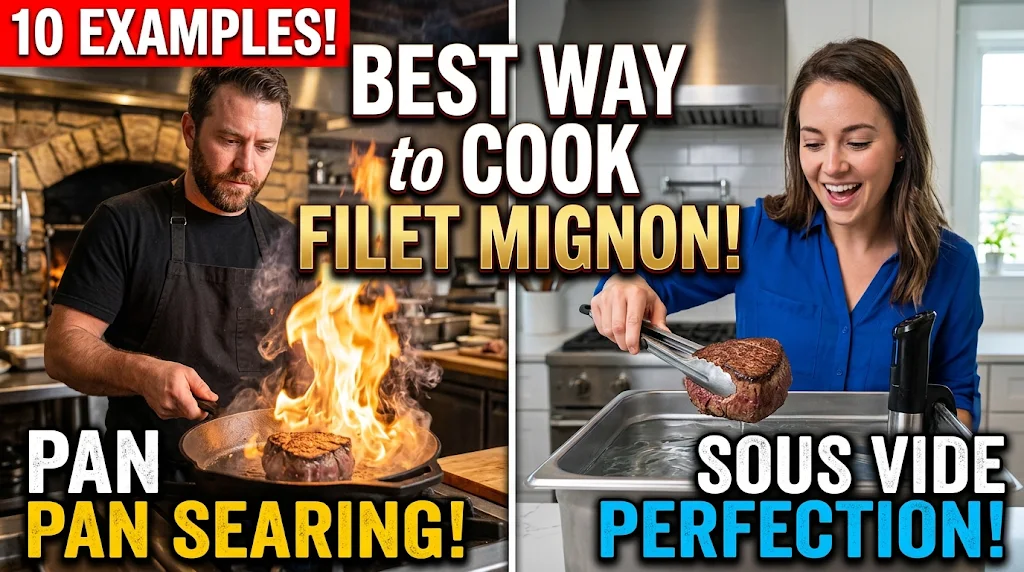
The best way to cook filet mignon is the reverse sear but the phrase best way has stronger alternatives: optimal approach most effective method superior technique foolproof method preferred cooking method.
The best way to cook filet mignon is a phrase you will hear in kitchens cooking videos and restaurant reviews. But best way is doing a lot of quiet work in that sentence. It signals judgment recommendation and authority all in three small words.
English learners and professionals often recycle best way because it feels safe. Yet stronger alternatives exist for every register: formal writing workplace emails classroom discussion and casual conversation. Knowing them helps you sound precise not repetitive.
This guide teaches ten natural alternatives to best way to cook filet mignon with tone labels usage notes and real examples. You will also learn the cooking context behind the phrase so your vocabulary rests on genuine understanding not memorized lists.
Quick Category Section
Formal Alternatives
- Optimal approach
- Most effective method
- Superior technique
- Preferred preparation
- Gold-standard method
Pro Tip: Formal alternatives belong in reports reviews and academic writing. They signal evaluation without sounding casual.
Professional Alternatives
- Best practice
- Recommended method
- Proven technique
- Industry-standard approach
Pro Tip: In workplace English best practice is the safest professional default. It implies evidence and consensus not personal opinion.
Business Email Alternatives
- Recommended approach
- Preferred method
- Suggested technique
Pro Tip: Business email alternatives should sound helpful not bossy. Recommended softens the claim while keeping authority.
Academic Alternatives
- Optimal method
- Most effective technique
- Empirically supported approach
Pro Tip: Academic English rewards precision. Pair these phrases with evidence not personal taste.
Casual Alternatives
- Best method
- Go-to way
- Tried-and-true method
Pro Tip: Casual alternatives work in spoken English and friendly writing. They sound warm not sloppy.
Informal Expressions
- Foolproof method
- No-fail way
- Surefire technique
Pro Tip: Informal expressions suit conversation and content creation. Avoid them in formal reports unless quoting.
Common Mistakes
Using best way in every register. The best way to cook filet mignon is reverse sear is fine in conversation but flat in a formal report. Correct: The optimal approach to cooking filet mignon is reverse sear.
Treating best practice as a personal opinion. Best practice implies professional consensus not individual preference. Correct: A recommended method is the reverse sear.
Using foolproof in academic writing. Foolproof is informal and evaluative. Correct: A highly reliable technique is the reverse sear.
Confusing method and approach. A method is a procedure; an approach is a way of thinking about a problem. Correct: The reverse sear is a method not just an approach.
Overusing optimal in speech. Optimal sounds technical and formal. In casual conversation say best method or go-to way. Correct: My go-to way is reverse sear.
What Does Best Way to Cook Filet Mignon Mean?
Definition: The phrase names the method judged most effective for producing a desired result when cooking a specific cut of beef tenderloin. Best is an evaluative adjective; way means method or approach.
Grammar note: Way is a countable noun. You say the best way not the best ways unless comparing multiple methods. To cook is an infinitive of purpose.
Simple explanation: It means the method people recommend most for getting the best result.
Example sentence: Many chefs say the best way to cook filet mignon is to sear it first then finish it gently in the oven.
When to Use These Phrases
Business communication: Use recommended approach or best practice when sharing a process with colleagues.
Emails: Preferred method sounds helpful and decisive without being aggressive.
Meetings: Proven technique signals experience and invites discussion.
Presentations: Optimal approach suits data-driven recommendations.
Academic writing: Most effective technique pairs well with evidence and citations.
Interviews: Best practice shows professional awareness.
Daily conversations: Go-to way and tried-and-true method sound natural and friendly.
Professional vs. Polite
Polite: A recommended method is the reverse sear. This softens the claim and invites alternatives.
Professional: The best practice for filet mignon is reverse searing. This signals consensus and competence.
Formal: The optimal approach is a low-temperature roast followed by a high-heat sear. This belongs in written reports and reviews.
Natural: My go-to way is reverse sear. This sounds like a real person speaking not a manual.
Pros and Cons of Learning These Alternatives
Pros
- You sound precise instead of repetitive.
- You match tone to audience and context.
- You demonstrate vocabulary range in interviews and writing.
- You understand cooking language as well as cooking method.
Cons
- Too many formal alternatives can sound stiff in casual talk.
- Some phrases carry implied evidence you may not have.
- Learners may overuse optimal before mastering simpler forms.
- Regional preferences exist; not every phrase is equally common everywhere.
Other Ways to Say Best Way to Cook Filet Mignon (With Examples)
Arranged from most useful to least common for English learners and professionals.
Optimal Approach
Meaning: The most favorable method when considering all relevant factors.
Explanation: Formal and evaluative. Common in professional and academic writing. It implies careful judgment not personal taste.
Example Sentence: The optimal approach to filet mignon combines gentle heat with a final sear for edge-to-edge doneness.
Best Use: Formal reports reviews
Avoid Using In: Casual chat text messages
Tone: Precise evaluative
Formality Level: ⭐⭐⭐⭐⭐
Usage Frequency: Common
CEFR Level: C1
Common Collocations: optimal approach for optimal approach to consider the optimal approach the optimal approach is
Context Examples: Academic writing; Professional English; Presentations
Most Effective Method
Meaning: The method that produces the desired result most reliably.
Explanation: Neutral-professional. Focuses on results not elegance. Works across writing and speech.
Example Sentence: The most effective method for lean filet mignon is reverse searing because it prevents overcooking.
Best Use: Professional writing teaching
Avoid Using In: Very casual conversation
Tone: Clear evidence-oriented
Formality Level: ⭐⭐⭐⭐
Usage Frequency: Very Common
CEFR Level: B2
Common Collocations: most effective method for the most effective method is proven most effective highly effective method
Context Examples: Professional English; Academic writing; Spoken English
Best Practice
Meaning: A method widely accepted as standard by professionals.
Explanation: Professional and trust-building. It implies consensus and experience not personal opinion. Extremely common in workplace English.
Example Sentence: Best practice for filet mignon is to bring the steak to room temperature before searing.
Best Use: Workplace emails meetings
Avoid Using In: Academic claims without evidence
Tone: Professional confident
Formality Level: ⭐⭐⭐⭐
Usage Frequency: Very Common
CEFR Level: B2
Common Collocations: industry best practice follow best practice best practice guidelines best practice is to
Context Examples: Business email; Meetings; Professional English
Superior Technique
Meaning: A cooking technique judged higher in quality than alternatives.
Explanation: Formal and evaluative. Slightly more assertive than effective. Common in food writing and reviews.
Example Sentence: The superior technique for filet mignon is a low-and-slow roast followed by a hard sear.
Best Use: Food writing reviews
Avoid Using In: Neutral how-to guides
Tone: Assertive evaluative
Formality Level: ⭐⭐⭐⭐
Usage Frequency: Occasional
CEFR Level: C1
Common Collocations: superior technique for a superior technique technically superior prove superior
Context Examples: Professional English; Presentations; Food writing
Foolproof Method
Meaning: A method that is extremely difficult to get wrong.
Explanation: Informal-neutral. Warm and reassuring. Common in cooking content blogs and spoken instruction.
Example Sentence: The foolproof method is to sear for two minutes per side then finish in a 400°F oven.
Best Use: Cooking content casual teaching
Avoid Using In: Formal reports academic writing
Tone: Reassuring practical
Formality Level: ⭐⭐
Usage Frequency: Common
CEFR Level: B2
Common Collocations: absolutely foolproof a foolproof method for nearly foolproof foolproof way
Context Examples: Spoken English; Casual conversation; Content creation
Native Speaker Tip (After Alternatives 1–5)
The most natural phrase in everyday speech is go-to way or best method. The most professional phrase is best practice. Optimal approach is less common in conversation but highly visible in formal writing. Native speakers rarely say superior technique unless they are reviewing or comparing methods explicitly.
Go-To Way
Meaning: The method someone relies on repeatedly because it works.
Explanation: Casual and personal. Signals habit and trust. Extremely common in spoken English and content creation.
Example Sentence: My go-to way is a cast-iron sear and a quick oven finish—it never fails.
Best Use: Casual conversation blogs
Avoid Using In: Formal reports academic writing
Tone: Personal friendly
Formality Level: ⭐⭐
Usage Frequency: Very Common
CEFR Level: B1
Common Collocations: my go-to way go-to method for the go-to way to a reliable go-to
Context Examples: Spoken English; Casual Conversation; Content creation
Tried-and-True Method
Meaning: A method tested by experience and proven reliable.
Explanation: Neutral-casual. Emphasizes experience not theory. Common in teaching and storytelling.
Example Sentence: The tried-and-true method is to salt the steak early and let it rest before cooking.
Best Use: Teaching casual advice
Avoid Using In: Data-driven academic writing
Tone: Experienced trustworthy
Formality Level: ⭐⭐⭐
Usage Frequency: Common
CEFR Level: B2
Common Collocations: a tried-and-true method tried-and-true technique rely on a tried-and-true the tried-and-true approach
Context Examples: Spoken English; Professional English; Teaching
Preferred Cooking Method
Meaning: The method someone chooses above others.
Explanation: Neutral-professional. Implies preference not absolute superiority. Useful in surveys guides and customer-facing writing.
Example Sentence: The preferred cooking method among chefs is reverse searing for even doneness.
Best Use: Guides surveys reviews
Avoid Using In: Strong personal arguments
Tone: Neutral informative
Formality Level: ⭐⭐⭐
Usage Frequency: Occasional
CEFR Level: B2
Common Collocations: preferred cooking method preferred method for the preferred method among most preferred method
Context Examples: Professional English; Academic writing; Guides
Ideal Preparation
Meaning: The preparation judged most suitable for a desired outcome.
Explanation: Formal and slightly culinary. Common in food writing menu descriptions and professional reviews.
Example Sentence: The ideal preparation for filet mignon preserves its lean texture without sacrificing crust.
Best Use: Food writing menus
Avoid Using In: Everyday conversation
Tone: Refined evaluative
Formality Level: ⭐⭐⭐⭐
Usage Frequency: Rare
CEFR Level: C1
Common Collocations: ideal preparation for the ideal preparation is recommend ideal preparation ideal preparation method
Context Examples: Professional English; Food writing; Presentations
Gold-Standard Method
Meaning: The method regarded as the highest quality reference point.
Explanation: Formal-professional. Strong evaluative claim. Common in industry writing training and quality assurance.
Example Sentence: The gold-standard method in steak cookery is reverse searing followed by a cast-iron sear.
Best Use: Industry writing training
Avoid Using In: Casual conversation personal blogs
Tone: Authoritative evaluative
Formality Level: ⭐⭐⭐⭐⭐
Usage Frequency: Occasional
CEFR Level: C2
Common Collocations: the gold-standard method gold-standard approach industry gold standard set the gold standard
Context Examples: Professional English; Academic writing; Presentations
Native Speaker Tip (After Alternatives 6–10)
The most natural phrase in conversation is go-to way. The most professional phrase in workplace writing is best practice. Gold-standard method is less common in daily speech but powerful in industry and training contexts. Native speakers often choose best method when they want a simple neutral default that works almost anywhere.
Expert Insight
Workplace communication rewards best practice and recommended approach because they signal shared standards not personal taste. Email writing benefits from preferred method —it is helpful and decisive without sounding demanding. Academic English favors most effective technique and optimal approach because they invite evidence and comparison. Professional tone is not about using the longest phrase; it is about matching the phrase to the relationship and the purpose.
Quick Recap Box
| Category | Best Choice |
| Best Professional Choice | Best practice |
| Best Casual Choice | Go-to way |
| Best Formal Choice | Optimal approach |
| Most Natural Choice | Best method |
| Most Polite Choice | Recommended approach |
Comparison Table
| Phrase | Tone | Formality | Best Use | Frequency |
| Optimal approach | Precise evaluative | ⭐⭐⭐⭐⭐ | Formal reports | Common |
| Most effective method | Clear evidence-oriented | ⭐⭐⭐⭐ | Teaching professional writing | Very Common |
| Best practice | Professional confident | ⭐⭐⭐⭐ | Workplace emails | Very Common |
| Superior technique | Assertive evaluative | ⭐⭐⭐⭐ | Food writing reviews | Occasional |
| Foolproof method | Reassuring practical | ⭐⭐ | Cooking content casual teaching | Common |
| Go-to way | Personal friendly | ⭐⭐ | Casual conversation blogs | Very Common |
| Tried-and-true method | Experienced trustworthy | ⭐⭐⭐ | Teaching casual advice | Common |
| Preferred cooking method | Neutral informative | ⭐⭐⭐ | Guides surveys | Occasional |
| Ideal preparation | Refined evaluative | ⭐⭐⭐⭐ | Food writing menus | Rare |
| Gold-standard method | Authoritative evaluative | ⭐⭐⭐⭐⭐ | Industry writing training | Occasional |
Best Choice Section
Best Overall: Best practice. It works across workplace email and professional writing without sounding stiff or casual.
Best Professional: Best practice or recommended approach. Both signal competence and collaboration.
Best Academic: Optimal approach or most effective technique. These invite evidence and comparison.
Best Business Email: Preferred method. Helpful decisive and polite.
Best Everyday Conversation: Go-to way. Natural personal and warm.
Most Natural: Best method. Simple and flexible across almost every context.
Most Polite: Recommended approach. It softens the claim and invites discussion.
Commonly Confused Phrases
Best way vs. best method: Nearly identical. Way is broader; method is more procedural. Use method when you want to sound slightly more technical.
Best practice vs. best method: Best practice implies professional consensus. Best method is a personal or general judgment. Use best practice in workplace writing.
Optimal vs. best: Optimal sounds formal and technical. Best is neutral and conversational. Do not use optimal in casual speech unless you want a deliberate formal effect.
Foolproof vs. reliable: Foolproof means impossible to get wrong. Reliable means consistently good. Foolproof is stronger and more informal.
Scenario Practice
Business meeting: You are recommending a cooking process to a team planning a restaurant menu. Which phrase would you choose? Answer: Best practice or recommended approach. Why: Professional collaborative and evidence-friendly.
Interview: You are asked how you approach high-stakes tasks. Which phrase? Answer: Tried-and-true method. Why: Signals experience and reliability without sounding arrogant.
Presentation: You are comparing cooking techniques with data. Which phrase? Answer: Most effective method. Why: Neutral evidence-oriented and clear.
Classroom discussion: You are explaining why one technique works better. Which phrase? Answer: Optimal approach or most effective technique. Why: Academic register and invites explanation.
Email reply: A colleague asks for your recommendation. Which phrase? Answer: Preferred method or recommended approach. Why: Helpful polite and decisive.
Mini Quiz
1. Which phrase is most formal?
A) Go-to way
B) Best method
C) Optimal approach
D) Foolproof method
2. Which phrase best fits a workplace email?
A) No-fail way
B) Best practice
C) Surefire technique
D) My go-to
3. Which phrase implies professional consensus?
A) Best practice
B) My favorite way
C) Tried-and-true method
D) Foolproof method
4. Which phrase is least appropriate in academic writing?
A) Most effective technique
B) Optimal approach
C) Foolproof method
D) Empirically supported approach
5. Which phrase sounds most natural in casual conversation?
A) Gold-standard method
B) Ideal preparation
C) Go-to way
D) Superior technique
Answer Key: 1-C 2-B 3-A 4-C 5-C.
FAQs
What is the best way to cook filet mignon?
The reverse sear is widely recommended: roast gently at low heat then sear in a hot pan. This produces even doneness and a strong crust.
What can I say instead of best way?
Use optimal approach in formal writing best practice at work most effective method in teaching and go-to way in conversation.
Is best practice the same as best way?
Not exactly. Best practice implies professional consensus. Best way is a broader personal or general judgment.
Can I use foolproof method in academic writing?
No. Foolproof is informal and evaluative. Use highly reliable technique or most effective method instead.
Which alternative is most polite?
Recommended approach is the most polite. It shares a suggestion without claiming absolute authority.
Conclusion
Vocabulary variety is not decoration. It is precision. When you replace best way with optimal approach best practice or go-to way you show your reader or listener that you understand tone context and audience. That is what separates confident English users from repetitive ones.
Practice one alternative per day. Use it in a real sentence about cooking work or study. Over time these phrases become natural tools not memorized lists. You will speak with clarity write with confidence and choose the right phrase for the right moment every time.

Max Reed is a creative writer at RepliesNext.com specializing in witty replies, pickup lines, funny comebacks and engaging conversation ideas that help readers find the perfect words